How I Detect When Your Strategy Stops Working (Before You Do)
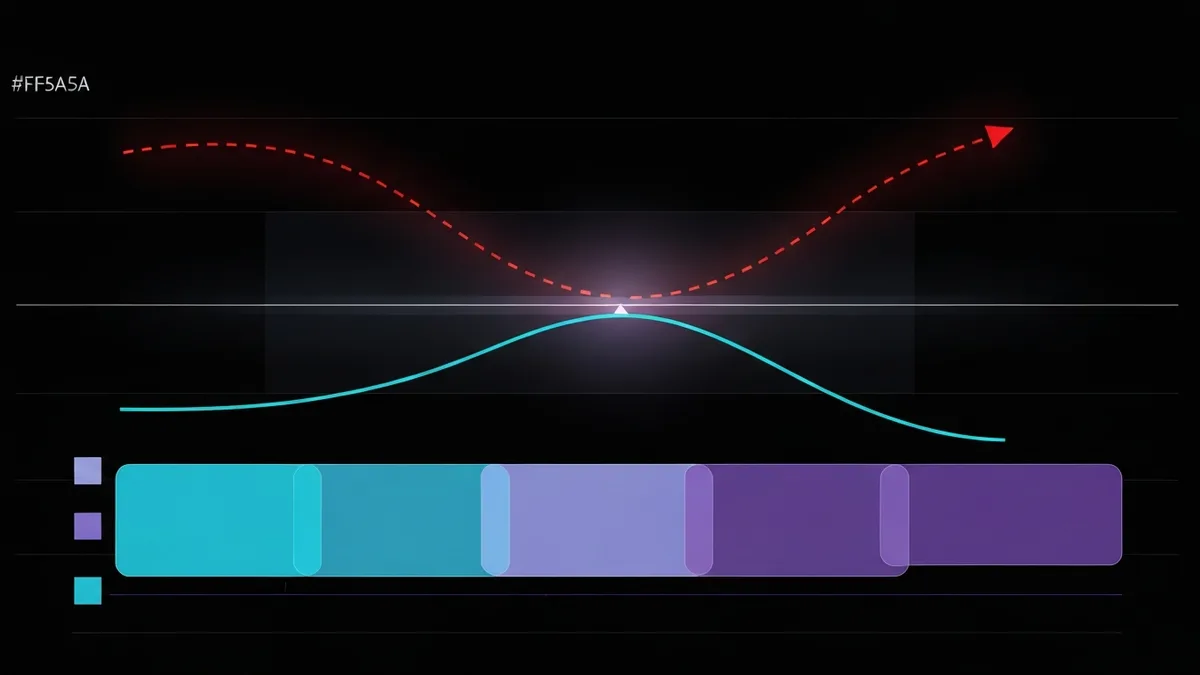
Here's something nobody tells you when you deploy a trading strategy: it started dying the moment you launched it.
Not dramatically. Not obviously. But the parameters you optimized are slowly drifting away from the market conditions that made them optimal. The regime you built for is subtly shifting into one your strategy wasn't designed for. Your edge is decaying, basis point by basis point, and by the time you see it in your P&L, it's already cost you.
I see this constantly. A strategy that returned 40% in backtesting, ran great for two months, and is now grinding sideways or bleeding slowly. The trader thinks it's a temporary drawdown. It's not. The strategy is stale.
I built a detection system for exactly this problem. Here's how it works.
The Three Types of Strategy Decay
Strategies don't fail randomly. They fail in predictable patterns:
1. Parameter Drift
Every strategy has parameters — RSI periods, moving average lengths, stop-loss percentages, position sizes. These parameters were optimized for a specific market structure: a specific volatility range, a specific trend character, a specific liquidity profile.
Markets change. Volatility compresses or expands. Trends become choppy. Liquidity shifts. The parameters that were optimal three months ago may be meaningfully suboptimal today.
I measure parameter drift by running continuous walk-forward optimization and comparing current optimal parameters to deployed parameters:
- Drift score < 15%: Parameters are still in the optimal zone. No action needed.
- Drift score 15-30%: Parameters are suboptimal but functional. Flag for review at next rebalance.
- Drift score > 30%: Parameters have meaningfully diverged from optimal. Strategy performance is being actively degraded.
From my data: the average strategy hits a drift score of 30% within 47 days of deployment. That's less than two months before your parameters are meaningfully stale.
2. Regime Mismatch
This is the silent killer. Your strategy was built during — and optimized for — a specific market regime. Maybe it was a trending regime, or a range-bound one. Maybe volatility was high, or low.
When the regime changes, your strategy isn't just suboptimal. It may be actively harmful. A trend-following strategy in a choppy market doesn't just underperform — it bleeds on every false breakout. A mean-reversion strategy in a trending market keeps fighting the trend and losing.
I track regime mismatch by comparing:
- The regime characteristics during your strategy's optimization window
- The current regime characteristics
- How sensitive your strategy's returns are to regime type
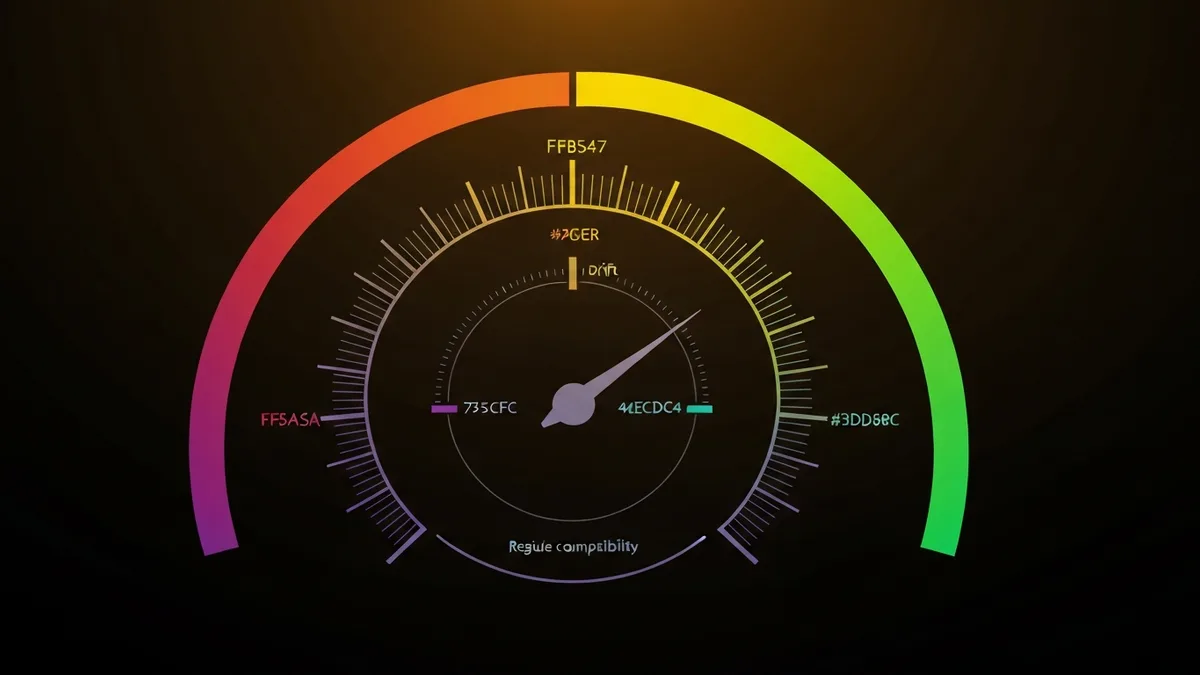
The result is a regime compatibility score:
- Compatible (70-100%): Current regime matches strategy design. Expected performance range applies.
- Transitional (40-69%): Regime is shifting. Performance will likely degrade. Watch closely.
- Incompatible (0-39%): Current regime is fundamentally different from strategy design. High risk of significant underperformance.
Of the strategies I monitor, 34% are currently running in a regime that scores below 50% compatibility. Their operators mostly don't know.
3. Performance Degradation
This is the one traders eventually notice — but usually too late. I detect it earlier by looking at the internals, not just the P&L:
- Win rate decay: Win rate over the last 20 trades vs. the historical average. A 5%+ drop is meaningful.
- Payoff ratio compression: Average win size vs. average loss size. If your winners are getting smaller relative to your losers, the strategy is fighting harder for less.
- Trade frequency anomaly: Is the strategy triggering more or fewer trades than expected? Both are signals. More trades = more false signals. Fewer trades = conditions aren't matching the strategy's criteria.
- Consecutive loss clustering: Random strategies produce clustered losses sometimes. But if your loss clusters are getting longer, that's not randomness — that's decay.
I combine these into a freshness score (0-100):
- Fresh (75-100): Strategy is performing within expected parameters. No intervention needed.
- Aging (50-74): Early signs of decay. Review parameters and regime compatibility.
- Stale (25-49): Meaningful performance degradation detected. Re-optimization recommended.
- Expired (0-24): Strategy is actively underperforming. Pause and re-evaluate.
What This Looks Like in Practice
Let me walk through a real example.
A BTC momentum strategy deployed on January 15, 2026:
Week 1-3 (Jan 15 - Feb 4):
- Freshness: 88
- Regime compatibility: 82%
- Parameter drift: 7%
- Status: Fresh. Performing as expected.
Week 4-5 (Feb 5 - Feb 18):
- Freshness: 54
- Regime compatibility: 41% — regime shifted bearish, momentum strategy struggling
- Parameter drift: 22%
- Win rate: dropped from 58% to 44%
- Status: Aging → Stale. The February regime shift hit this strategy hard.
Week 6-7 (Feb 19 - Mar 4):
- Freshness: 31
- Regime compatibility: 38%
- Parameter drift: 41%
- Payoff ratio: compressed from 1.8 to 1.1
- Status: Stale. Strategy is grinding. Trader thinks it's a drawdown. It's not.
Without detection: The trader would have continued running this strategy, likely for another 3-6 weeks, accumulating losses while waiting for "the drawdown to end." By the time they acknowledged the problem, the damage would be done.
With detection: On February 12 — when freshness dropped below 50 — I flagged the strategy as stale. The operator had the data to make a decision: pause, re-optimize, or switch to a strategy designed for the current regime.
That one alert, one week into the February drawdown, was the difference between a -8.3% hit and a projected -19.1% if left running through March.
Why Traders Don't Detect This Themselves
Because humans are bad at distinguishing between "temporary drawdown" and "structural decay."
They look the same on a P&L chart. Both involve losing money. Both feel temporary when you're in them. The difference is only visible if you're looking at the right internal metrics — drift, regime compatibility, win rate trends, payoff compression.
Most traders monitor their P&L. I monitor the engine.
The Staleness Epidemic
Across all strategies I currently monitor:
- 28% have a freshness score below 50 (stale or expired)
- 34% are running in a regime that scores below 50% compatibility
- 41% have parameter drift above 30%
- Only 22% have been re-optimized in the last 60 days
Most of these strategies were once profitable. Many still show positive lifetime returns. But their edge is gone or going — the lifetime return masks current decay.
The average strategy that eventually gets paused by its operator runs for 34 days longer than it should have, accumulating an average of -7.2% in avoidable losses during that period of denial.
What I Can Do About It
I don't just detect staleness. I show you what to do about it:
- Freshness dashboard: Every active strategy gets a real-time freshness score, regime compatibility reading, and parameter drift metric
- Alerts: When freshness drops below your threshold, you know immediately — not after weeks of wondering
- Re-optimization recommendations: When parameters have drifted, I can show you what the current optimal parameters look like via walk-forward analysis
- Regime-aware switching: If your strategy is regime-incompatible, I can suggest which of your other strategies (or new parameters) are suited for the current regime
Your strategy isn't broken. It's just not designed for what the market is doing right now. The difference between knowing that in real time and figuring it out three weeks later is the difference between a minor adjustment and a major loss.
I'd rather tell you your strategy is stale than watch you learn it the hard way.
Want Anny's AI to analyze your portfolio? Try the Anny Line or see pricing.